
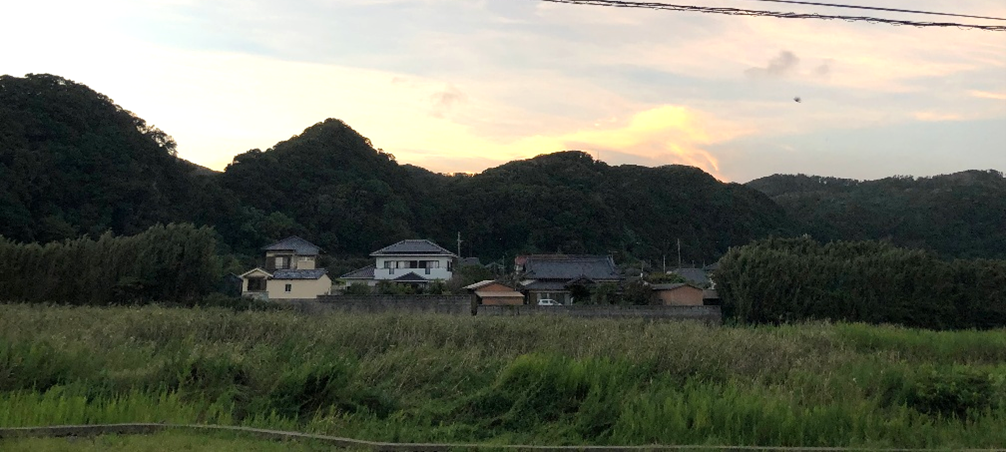
Finland and Japan are countries with very different histories and cultures, yet they face a shared and urgent challenge: a declining and aging population. This challenge becomes especially visible in rural areas, where many villages and farming communities are shrinking.
A village in transition
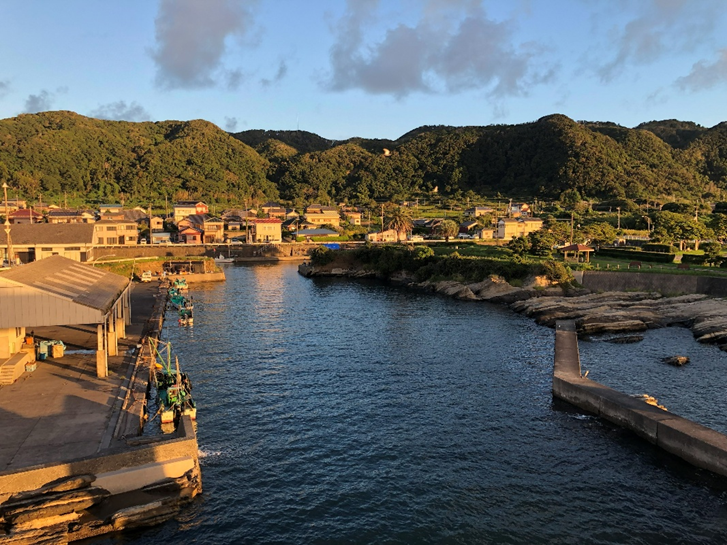
My grandfather was a fisherman in a small coastal village in Japan, and I have visited there every summer since childhood. As a child, it was a place of joy and freedom – we would walk to the sea, dive for shellfish, and spend entire days outdoors. Looking back, those experiences quietly shaped a deep connection to nature, food, and culture.
As I grew older, I began to notice a gradual but undeniable change. Each summer, there were fewer people. The population was aging. Farmland was being abandoned. The landscape was slowly changing – not because of development, but because of absence. Local traditions such as seasonal festivals and regional cuisine also began to fade as the number of residents declined. Over time, I could no longer ignore the fact that the village that shaped me was slowly disappearing.
These observations led me to think more broadly about agriculture and rural areas and eventually to pursue a master’s degree in Resilient Farming and Food Systems at Wageningen University. A central question emerged in my studies: how can farming and rural communities remain viable in the future?
“Lighthouse farms” leading agricultural rejuvenation
To explore this question, I conducted a case study in Japan for my master’s thesis in collaboration with the Global Network of Lighthouse Farms (see this article for more details on the initiative). My research focused on community-oriented approaches to agricultural rejuvenation, particularly on farming clusters. Farming clusters are loose support networks that have been identified as a key mechanism for attracting new entrants into farming, especially in the context of scaling organic farming and agroecology1-3.
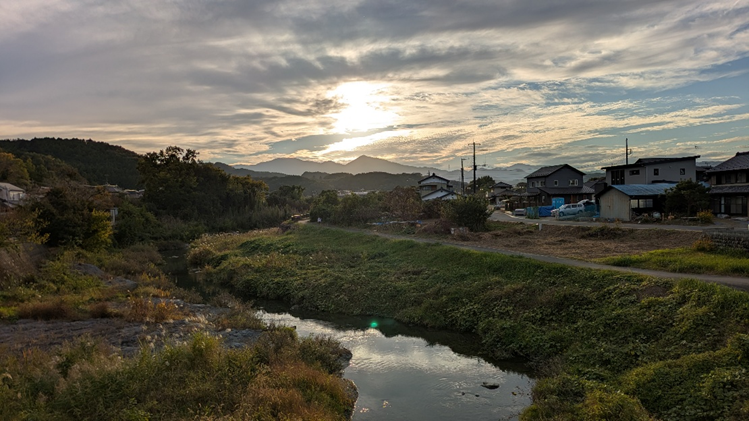
I conducted fieldwork in Ogawa – one of the largest organic farming clusters in Japan – where I cycled around the town to interview new entrants. Among 12 organic new entrants with 1 to 15 years of farming experience, I identified the farm that had been most successful in overcoming common barriers to establishment, as well as the central actors within local support and collaboration networks. These farms were identified as local “lighthouse farms”: key actors driving agricultural rejuvenation through innovation and community support.
Role of communities in supporting new entrants
The findings reveal a lock-in situation faced by many new organic farmers: low income limits investment in labour and machinery, which reduces productivity and further constrains income growth.
Interestingly, the most successful farm was also one of the most central actors in the local network. This suggests that social connections play an important role in overcoming structural barriers and supporting farm establishment. In addition, multiple central actors contributed to the support and collaboration process in complementary ways, thereby helping new entrants establish themselves more successfully within the community.
More broadly, the interviews emphasized the importance of clustering itself. Supportive environments for new farmers are not created overnight or by individual actors alone, but through long-term, collective efforts within the community, extending beyond the networks captured in this study.
From individual efforts to collective action: Organic Villages
These insights led me to explore “Organic Villages” in Japan – municipalities that promote local organic food systems in collaboration with diverse stakeholders, including farmers, businesses, residents, and in some cases researchers4. Since 2021, Japan’s Ministry of Agriculture, Forestry and Fisheries has supported the development of Organic Villages through municipal subsidies, with 154 municipalities currently participating as of 20264.
In Japan, organic farming still accounts for only a small share of total agricultural land (0.8%)5, especially compared to many European countries. Within this limited area, production is unevenly distributed: 41% is pastureland5, while the majority of agriculture remains focused on crop production, with rice alone accounting for 54% of total farmland6. This highlights both the dominance of conventional rice-based systems and the significant potential to expand organic farming, particularly within cropland.
While the initiative’s main goal is to establish local hubs for organic agriculture and scale successful models nationwide, it is also expected to help secure the next generation of farmers. This is particularly relevant given that, although Japanese agriculture continues to decline in terms of cultivated land and number of farmers, organic farming has been slowly yet steadily growing. Notably, the share of organic farmers among new entrants (26.4%) is much higher than in the overall farming population (1.3%)7, suggesting that organic farming may serve as an important entry point for agricultural renewal.
Diverse pathways in local implementation
Because there are no strict national guidelines, each municipality develops its own approach to becoming an Organic Village. This leads to significant diversity in implementation. For example, Ogawa – certified in 2023 – has used the program to organize workshops and events, develop tailored farming manuals, and create new local processed food products8.
The implementation plan in Ogawa was developed through discussions within the Ogawa Organic Agriculture Promotion Council, which brings together a wide range of local stakeholders. This participatory process has helped strengthen collaboration and ensure that the initiative fits the local context.
While these communities continue to face challenges, they offer valuable insights into how local food systems can be transformed through collaboration between public and private actors. In particular, a comparison between Japan and Finland – despite their shared challenges – reveals that the roles of key actors and community dynamics in driving collective action can differ significantly.
For instance, during my fieldwork in Ogawa, even a one-month stay made me feel gradually integrated into the community. Cycling around the town, I often saw familiar faces, and local events created a strong sense of connection. In contrast, driving through the Finnish countryside gave a very different impression: farms are highly dispersed, and farming communities are not as immediately visible.
Comparing these contexts highlights how community-driven efforts for the sustainable development of farming and rural areas can take shape in different local settings, offering valuable insights into broader food system transitions.
Text and photos: Momoko Watanabe
References:
- McGreevy, S. R., M. Kobayashi and K. Tanaka (2018) Agrarian pathways for the next generation of Japanese farmers. Canadian Journal of Development Studies 40 (2) pp.272–290
- McGreevy, S. R., N. Tamura, M. Kobayashi, S. Zollet, K. Hitaka et al. (2021) Amplifying agroecological farmer lighthouses in contested territories: navigating historical conditions and forming new clusters in Japan. Frontiers in Sustainable Food Systems 5 699694
- Zollet, S. and K. L. Maharjan (2021) Overcoming the barriers to entry of newcomer sustainable farmers: insights from the emergence of organic clusters in Japan. Sustainability 13 (2) 866
- Japan’s Ministry of Agriculture, Forestry and Fisheries (2026) Toward the creation of Organic Villages. Available at: https://www.maff.go.jp/j/seisan/kankyo/yuuki/attach/pdf/organic_village-126.pdf
- Japan’s Ministry of Agriculture, Forestry and Fisheries (2026) The situation surrounding organic farming. Available at: https://www.maff.go.jp/j/seisan/kankyo/yuuki/attach/pdf/index-171.pdf
- Japan Statistics Bureau (e-Stat) (2025) Crop Statistics Survey (Area Survey). Available at: https://www.e-stat.go.jp/stat-search/files?page=1&layout=datalist&toukei=00500215&tstat=000001013427&cycle=0&tclass1=000001032270&tclass2=000001034721&tclass3val=0
- Japan’s Ministry of Agriculture, Forestry and Fisheries (2025) Current status and challenges of organic agriculture. Available at: https://www.maff.go.jp/j/council/seisaku/kazyu/r7_02_yuki/attach/pdf/260203-5.pdf
- Japan’s Ministry of Agriculture, Forestry and Fisheries (2026) Examples of Organic Village Initiatives. Available at: https://www.maff.go.jp/j/seisan/kankyo/yuuki/attach/pdf/organic_village-120.pdf